¡Tiempo de descanso!
Tu sesión Pomodoro ha terminado
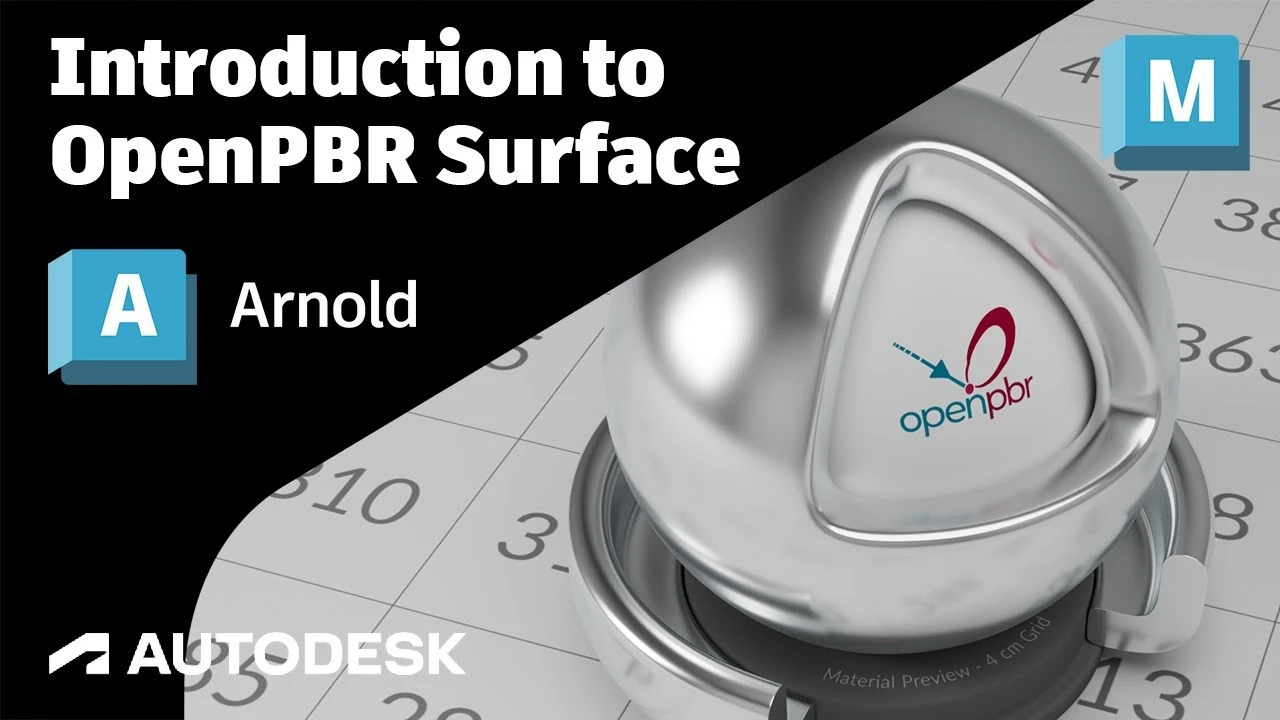
An Introduction to OpenPBR Surface in Arnold
Principiante🍅 Timer Pomodoro
Estudia 25 min, luego toma un descanso. ¡Mejora la concentración!
Descripción
OpenPBR Surface is a shading model that renders consistently across Arnold, VRay, Redshift, Cycles, Karma, Omniverse, Octane, Unreal Engine and more. In this video we break down exactly how its layered system works. You'll learn how to control every aspect of your material using one unified framework.
OpenPBR Surface is a highly art-directable material model: an expressive yet intuitive set of parameters, with direct control over the perceived colors, detailed enough to represent most real-world materials. It is physically accurate, meaning that materials look realistic by default, while still giving artists the freedom to represent imaginary ones. OpenPBR Surface aims to strike a balance between simplicity of use and expressivity.
This physically based shading model has been developed to offer creatives a more artist-friendly bridge between different software applications. It's an open standard backed by major players like Autodesk, Adobe, and NVIDIA.
https://help.autodesk.com/view/ARNOL/...
https://github.com/AcademySoftwareFou...
0:00 Introduction
1:12 Model Overview
2:17 Metal
3:25 Dielectric
3:44 Diffuse Base
4:44 Subsurface scattering
6:18 Transparent Base
7:41 Transmission Dispersion
8:27 Specular Roughness
9:38 Coat
10:50 Fuzz
11:28 Thin-film iridescence
12:42 Emission
13:15 Bump mapping
13:36 Thin-walled mode
14:34 Conclusion
OpenPBR Surface is a highly art-directable material model: an expressive yet intuitive set of parameters, with direct control over the perceived colors, detailed enough to represent most real-world materials. It is physically accurate, meaning that materials look realistic by default, while still giving artists the freedom to represent imaginary ones. OpenPBR Surface aims to strike a balance between simplicity of use and expressivity.
This physically based shading model has been developed to offer creatives a more artist-friendly bridge between different software applications. It's an open standard backed by major players like Autodesk, Adobe, and NVIDIA.
https://help.autodesk.com/view/ARNOL/...
https://github.com/AcademySoftwareFou...
0:00 Introduction
1:12 Model Overview
2:17 Metal
3:25 Dielectric
3:44 Diffuse Base
4:44 Subsurface scattering
6:18 Transparent Base
7:41 Transmission Dispersion
8:27 Specular Roughness
9:38 Coat
10:50 Fuzz
11:28 Thin-film iridescence
12:42 Emission
13:15 Bump mapping
13:36 Thin-walled mode
14:34 Conclusion
A continuación
nParticles Instancer Maya tutorial ataque de aviones #maya #mayatutorial #mayatutorials #nparticles
Blender Deluxe Tutoriales
¡Crea este Diorama Realista! Tutorial de UVs en Maya y Texturizado en Substance Painter
Blender Deluxe Tutoriales
How to Easily Translate a Walk Cycle Forward | Maya Animation Tip
Mark Masters
Maya Tutorial | 5 Easy steps for Clean UVs!
Abe Leal 3D
¡Descubre cómo transformar tus escenas en Arnold Maya con aiAtmosphereVolume! 🌟
Blender Deluxe Tutoriales
3D Game Asset Creation (Full Process) - Stylised Axe
Stu Lloyd (CG Stu)
Arnold Tutorial - How to use the toon tonemap hue saturation
Arnold renderer
Arnold Tutorial - Snow and ice scene using the Distance shader
Arnold renderer
How to Quick Rig a Character with Controllers? | Lesson10PartA | Maya Animation for Beginners | Live
zinteractive
Arnold Tutorial - Using the mesh_light in MtoA
Arnold renderer