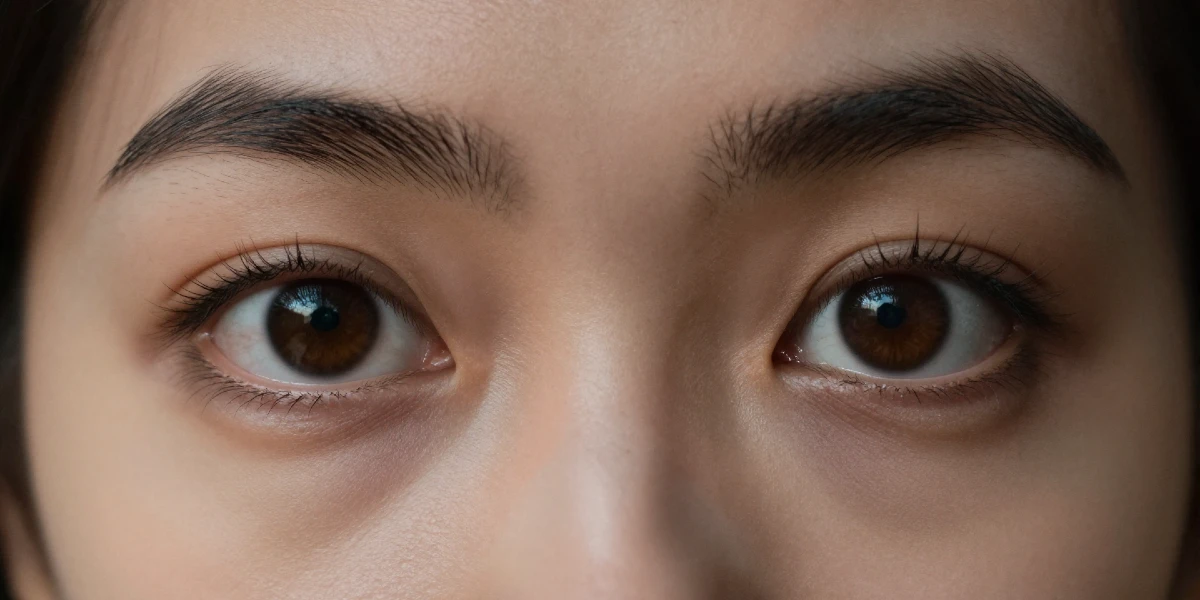
Image generated with AI
Why 3D Characters Trigger Uncanny Valley Discomfort Explained

Diego Cortés
Author
Have you ever stared at a 3D character in a film or game and felt an inexplicable unease? That almost-human face, with its empty gaze or waxen smile, triggers a deep, subconscious alarm. This sensation isn't just in your head—it’s a well-documented phenomenon known as the Uncanny Valley. Let’s dive into the surprising reasons why hyperrealistic digital figures can make us uncomfortable and what this means for animation, VFX, and 3D CGI.
The Uncanny Valley Origin: From Robots to Digital Characters
The concept of the Uncanny Valley was first coined in robotics, describing the eerie feeling humans get when encountering robots that are almost human, but not quite. This near-perfection creates a strange dissonance in our perception.
Interestingly, the same principle applies to digital characters in animation and video games. As technology advanced toward photorealism, creators realized that pushing too close to human likeness without perfection can actually backfire—resulting in discomfort rather than empathy.
“The Uncanny Valley is where robots or digital humans become so close to reality that their imperfections become disturbingly obvious.”
This origin story reminds artists and technicians that hyperrealism is a double-edged sword: striving for authenticity can sometimes create a feeling of alienation rather than connection.
Advanced Technology: The Double-Edged Sword of 3D Scanning and Motion Capture
Tools like 3D scanning and motion capture (MOCAP) are designed to make digital characters look and move like real humans. Paradoxically, these same technologies can plunge a character into the Uncanny Valley if the data is imperfectly captured or applied.
Even the slightest error in facial capture or motion tracking can produce unnatural expressions or jerky movements that our brains instantly flag as “off.” This underlines how hyperrealism demands not just precision but a nuanced understanding of human subtleties.
“Facial capture is the frontline defense against the Uncanny Valley, preserving the subtle gestures that make digital humans believable.”
Thus, the industry increasingly relies on facial capture to maintain natural expressions, ensuring that 3D characters avoid sliding into discomfort-inducing territory.
The Invisible Framework: Why Topology Makes or Breaks Facial Realism
Behind every digital face lies a polygonal mesh—its topology. This mesh’s organization is critical, especially around deformable areas like eyes and mouth. If the polygon flow (edgeloops) doesn’t mimic real muscle and skin behavior, facial movements become unnatural.
Think of the mesh as a stretched rubber mat held by invisible strings underneath. If those strings (the mesh’s structure) are misaligned, the surface wrinkles and folds unnaturally, creating micro-expressions that scream “fake” to our brains.
For animators and modelers, mastering topology is essential to avoid subtle glitches that can break the illusion of life, making the difference between a convincing character and one that falls into the Uncanny Valley.
Rigging and Animation: The Soul of Digital Characters Lies in Their Movement
No matter how perfect the mesh, a character’s realism hinges on its animation rig—the system controlling how the model moves. Rigging uses two main techniques: morphers (blend shapes) and bones. Both must work flawlessly with the underlying topology.
Morphers create different facial expressions by blending multiple models, each representing a specific emotion or movement. For example, a simple eyelid blink can require a dozen different morph targets to look natural. If vertex counts or numbering don’t align perfectly, the transitions become jerky or distorted.
Bones act like a skeleton, deforming the mesh through rotations and movements. However, if the bone placement doesn’t consider the mesh's anatomical flow, movements will appear stiff or puppet-like.
“A character with perfect topology but poor rigging is like a puppet with tangled strings—lifeless and unsettling.”
Ultimately, the rigging process breathes life into the character. It must capture subtle, natural motions to cross the Uncanny Valley and resonate emotionally with viewers.
Will We Ever Fully Cross the Uncanny Valley with Emerging Technologies?
The Uncanny Valley isn’t a single hurdle but a complex interplay of mesh design, facial capture, and animation quality. Each tiny imperfection compounds, triggering that eerie feeling.
With advances like Unreal Engine 5’s real-time photorealistic rendering and AI-assisted animation, the gap between digital and real humans narrows rapidly. Yet, some experts argue that as we approach perfect realism, new subtleties might emerge to unsettle us in ways we can’t yet predict.
For artists and technologists, this ongoing challenge is an invitation to innovate—not just in tools but in understanding human perception deeply.
“The quest to cross the Uncanny Valley is as much a psychological journey as it is a technological one.”
In the end, the mystery of the Uncanny Valley reveals how exquisitely attuned our brains are to human nuances. As animation and VFX continue to evolve, the question remains: will we someday create digital humans indistinguishable from reality, or will our own perception forever find something to unsettle us in these near-perfect reflections?