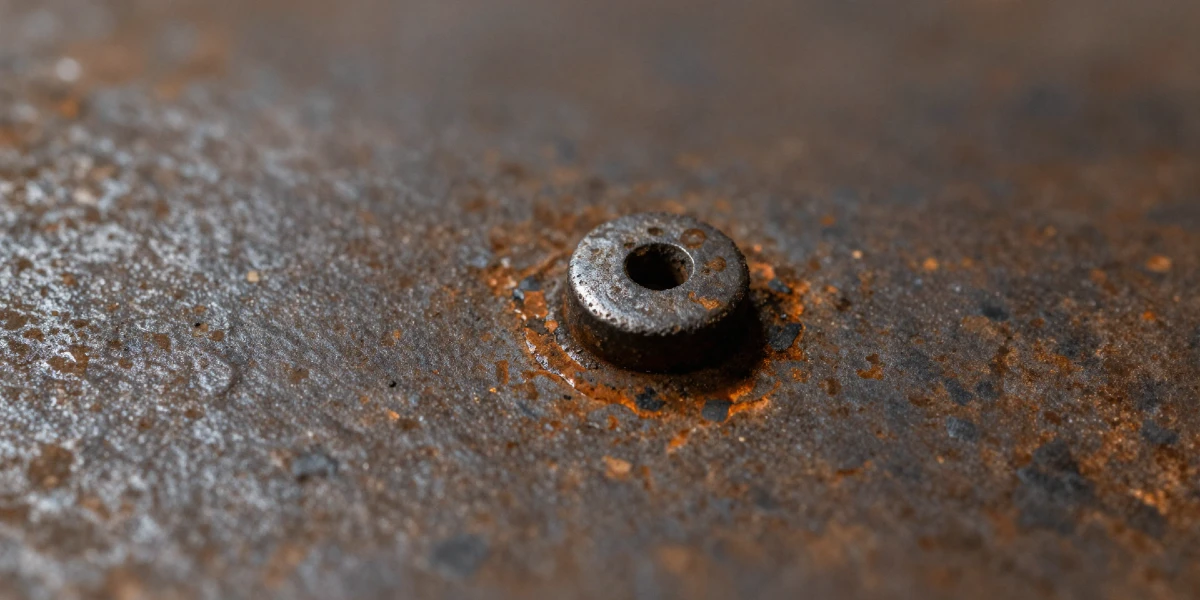
Image generated with AI
5 Surprising Truths About PBR Textures You Must Know

Diego Cortés
Author
For years, artists struggled with guesswork and inconsistent results when creating digital materials. Specular maps were treated as mere "brightness knobs," and lighting changes often broke the illusion. Then Physically Based Rendering (PBR) came along, introducing strict rules grounded in physics that at first felt limiting—but in reality, they set artists free. Let’s explore five surprising truths about PBR textures that reveal why these rules actually boost creativity and realism in 3D art.
1. PBR Is Not Just a Style—It’s Physics in Action: The Law of Energy Conservation
At its core, PBR is governed by a fundamental scientific principle: the conservation of energy. When light hits a surface, it either bounces off (specular reflection) or penetrates and diffuses within the material (diffuse reflection). These two behaviors cannot happen simultaneously with the same amount of light energy.
Imagine light as having 100 units of energy. Every unit reflected reduces what can be absorbed to create color. This rule is baked into PBR engines, preventing impossible materials—like a perfect mirror that also displays vivid color as if matte. This physical accuracy ensures materials look consistent under all lighting conditions, freeing artists from trial-and-error guesswork.
“PBR lets artists work with reflectivity and albedo values without accidentally breaking physics laws, which often cause materials to look wrong under different lights.”
2. Roughness Rules: Why Surface Micro-Imperfections Trump Simple Brightness
Before PBR, artists used specular maps to crudely control “shininess.” Now, roughness maps take center stage by simulating real physical surface details—microscopic bumps and scratches that scatter light unpredictably.
Think of throwing a ball at a wall: a smooth wall (roughness 0) reflects it cleanly at a predictable angle, like a sharp highlight. A rough wall (roughness 1) scatters the ball in every direction, creating a blurred reflection. This shift from painting “brightness” to defining physical surface properties dramatically enhances realism.
“Water and mud have similar reflectivity but look very different because of roughness. PBR empowers artists to define these subtle but crucial differences physically rather than by guesswork.”
3. Every Surface Is a Perfect Mirror—If You Look at It from the Right Angle (Fresnel Effect)
PBR automatically accounts for a counterintuitive optical fact: reflectivity increases as the viewing angle becomes more grazing. This is known as the Fresnel effect.
Surprisingly, all surfaces—wood, plastic, ceramic—approach 100% reflectivity at extreme angles. This means a wooden table seen edge-on behaves like a mirror. PBR engines handle this naturally, eliminating the need for artists to manually paint fake edge highlights, improving both realism and workflow.
4. Materials Are Binary: You’re Either Metal or Not (The Metallic Parameter Explained)
PBR separates materials into two distinct categories based on their metallicity value: metals and non-metals. This is not an artistic choice but a physical one. Metals conduct electricity and have high, colored reflections, while non-metals are insulators with low, colorless reflections.
Metals: High reflectivity (60-90%), colored reflections matching their base color, no diffuse color.
Non-metals: Low reflectivity (<20%), uncolored reflections, visible diffuse color.
Mixing metallic values (like 0.5) to create “half-metal” materials is physically incorrect and leads to unpredictable results. Instead, complex appearances like dusty metal are achieved by layering non-metallic materials (dust) on top of metals.
5. The Hidden Cost of PBR Realism: Static Worlds in Game Development
PBR materials, especially metals, depend heavily on accurate environmental reflections. Without these, a chrome object looks like a dull black sphere. Real-time reflection calculations are computationally expensive, so developers use reflection probes—static baked images of the environment—to simulate reflections.
This technique favors static, unchanging game worlds, limiting dynamic interactions and environmental changes. However, this is a technological hurdle, not a permanent constraint. As ray tracing becomes widespread, real-time reflections will become more feasible, unlocking dynamic, physically accurate environments without sacrificing performance or realism.
Physically Based Rendering challenges artists to embrace physics rather than ignore it. By understanding and applying these surprising truths, we gain tools that simplify workflows and create materials that stay believable no matter the lighting or viewpoint. Now, armed with this knowledge, how will you rethink the way you recreate the world in your next 3D project?